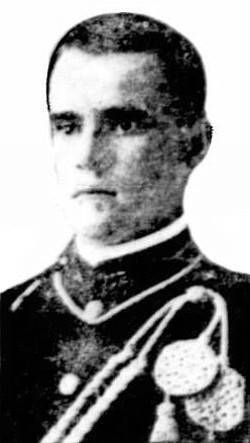
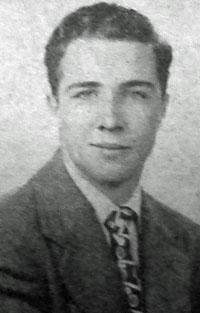
|
Pvt. Richard E. Hynes
United States Army (1942-1944)


Richard Elberton Hynes was born on March
10, 1914 to parents Sabra and William Hynes of 2736 Waddington Avenue. He was
a graduate of South Hills High School, Class of 1934, where he was a member of
the Glee Club, the Cooking Club and the School Band. In his Senior year he was
voted the most "Demure."
After high school, Richard took a job at
the Carnegie-Illinois Steel Corporation, where he was skilled in the mechanical
treatment of metals (rolling, stamping, forging, pressing, etc.) The Hynes family
were members of the Mount Washington United Presbyterian Church, where Richard
sung in the choir.
Richard Hynes was inducted into the U.S.
Army on April 24, 1942. After completing basic training, he was assigned to
the 8th Regiment, 4th Motorized Infantry Division, nicknamed the Ivy Division.
Private Hynes joined his new unit at Camp Gordon, Georgia and rehearsed training
at the Carolina Maneuvers during the fall of 1942.
The 4th Division moved to Fort Dix, New
Jersey on April 12, 1943, where in August it was again reconfigured, this time as
a standard infantry division. The Division participated in battlefield maneuvers
in Florida starting in September and after this fall training exercise arrived at
Camp Jackson, South Carolina, on the 1st of December.

During this time in Florida, Richard met
Elizabeth Ann Herin of Macon County, Georgia. The two fell in love and, when he
was granted leave in November. The two were married at the brides home in Macon
on November 4, 1943. Afterwards they honeymooned for two weeks in Daytona Beach,
Florida.
Their celebration was brief but memorable
as Richard had to return to his unit in December, and a month later was on his
way overseas. Hynes and the rest of the 4th Division boarded troop transport
ships and departed New York harbor on January 18, arriving in England on
January 26.
  
After several months of training in Wales
and southern England, the men of the 8th Infantry Regiment were ready for battle.
Assigned to the VII Corps, U.S. First Army, on the evening of June 4 the men
boarded a transport for the trip across the English Channel to France. After
leaving port and beginning the cross-channel journey, the ship turned around
and returned. A weather delay had forced a one-day postponement.
The next evening they set sail, and on
the morning of June 6, the 8th Regiment were the first surface-borne Allied
troops to step foot in Normandy. These soldiers were the tip of the spear on
Utah Beach. After only brief engagements with the enemy on D-Day, the 8th
Regiment launched its first attack at Turqueville and Ecoqueneauville on June
7 in an effort to link up with the 82nd Airborne Division and clear the town
of Saint Mere-Eglise.

4th Infantry Division soldiers on Utah Red
Beach on D-Day, June 6, 1944.
After relieving the 82nd Airborne
Division at the town of Sainte Mere-Eglise, the Ivy Division, along with the
9th and 79th Divisions, began the effort to clear the Cotentin Penisula. On
the morning of June 8, the 8th Regiment was ordered to take the area between
Montebourg and the Montebourg Station. Defending were elements of the German
709th and 243rd Divisions, as well as such reinforcements as the Sturm
Battalion AOK 7.
The 8th Infantry attacked along the
western side of the Saint Mere-Eglise-Montebourg Highway. It was opposed from
the beginning by artillery fire, but its first contact with enemy infantry came
at Neuville-au-Plain. The Germans yielded the town after a sharp skirmish.
Beyond Neuville-au-Plain the going was easier, as the 8th Infantry
turned to the left and continued its attack on the western side of the highway.
As it approached Fresville and Grainville, enemy artillery and sniper fire
increased and slowed down the Regiment.

The 8th Regiment advance towards
Montebourg on June 8-11.
From here, the advance along the highway
became a slow and costly affair. The German artillery, consisting of mortars,
field guns and nebelwerfers was accurate and frequent, leaving a trail of dead
along the trail north. After a bitter battle on the outskirts of Ecausseville,
followed by a massive night time artillery bombardment, by the morning of June
10, the Regiment found the well-defended town abandoned and began their drive
to secure the last large town remaining on the route toward Cherbourg.
 
German's of the 709th Division
displacing near Montebourg (left) and a soldier of the 8th Regiment
inspecting a German 88mm anti-aircraft artillery piece abandoned on the
road to Montebourg.
Once again the way northward was defended
by effective strongpoints and persistent enemy artillery. It was tough going, but
the Regiment continued the advance. By evening, it had come up against a
well-prepared defensive line running east-west along the railway line leading to
Montebourg. The 8th Regiment was ordered to drive the Germans from that position,
while the remainder of the Division took the town of Montebourg.
It was during this battle to drive the
well-entrenched German defenders from their positions along the railway line that
Private Richard E. Hynes was killed in action on June 12, 1944.

News of Private Hynes fate took some time
to reach his wife Elizabeth in Atlanta, Georgia and a bit longer to get back to
his family in Pittsburgh. His death was not reported in the Pittsburgh Press until
October 2, 1944, over three months after the eventual fall of Cherbourg. While the
Hynes family and the community of Brookline mourned Richard's loss, a Gold Star
was hung in the window of the home at 2736 Waddington Avenue.
Richard's wife Elizabeth, who was at the
time working as a clerk at the Federal Reserve Bank in Atlanta, took ill after
hearing of her husband's death. Tragically, after a month-long struggle, she died
in a private hospital on November 20. No doubt the grief over the loss of her
beloved Richard played a part in her declining health.
The Pittsburgh Press reported on October
31, 1948, that Private Richard E. Hynes' body had been returned to the United
States from France and was being buried alongside Elizabeth Herin Hynes in the
Macon Memorial Park Cemetery.

Back in France, the Ivy Division took
Montebourg and moved on to secure the port of Cherbourg by June 29. Afterwards,
they participated in the hedgerow fighting in the bocage and in the great
Normandy breakout. It helped stem the German drive toward Avranches and by August
participated in the liberation of Paris.
The 4th Division then moved into Belgium
to attack the Siegfried Line on September 14. Slow progress into Germany continued
in October, and by November 6 the Division entered the Battle of the Hurtgen Forest,
where it was engaged in heavy fighting until early December. It then shifted to
Luxembourg, only to meet the German Army's winter Ardennes Offensive head-on. A
fierce defensive struggle ensued until the enemy drive stalled.
After holding back the Germans in the
Ardennes, the Division counter-attacked in January 1945 and, after four more
months of fighting in Germany reached Miesbach on the Isar River on May 2.
There it was eventually relieved and placed on occupation duty.
* Written by Clint Burton:
May 20, 2018 *
The Brookline
War Memorial

Listed below are
many of the sons of Brookline who gave their
lives to preserve freedom and contain aggression during
World War I, World War II, Korea and Vietnam.
“It is foolish and wrong to mourn the men who died.
Rather, we should thank God that such men lived.”
General George S. Patton


World War I
(1917-1919)
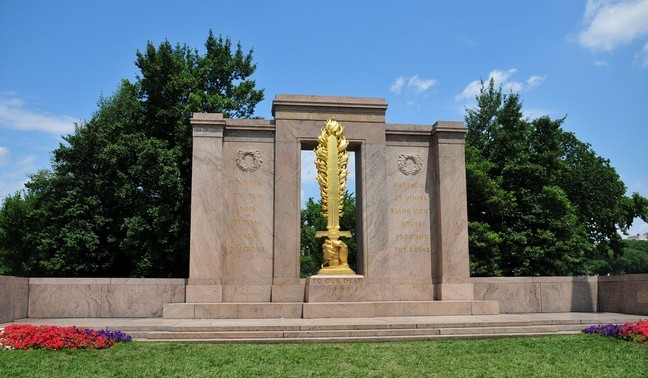
The World War I Memorial -
Washington D.C.
<> <>
<> <> <> <> <> <> <> <>
<> <> <> <> <> <> <> <>
<> <> <> <> <> <> <> <>
<> <> <> <> <> <>
World War II
(1941-1945)
|
Alm, William H.
Pioneer Avenue
Army
Details |
Arensberg, Roy T.
Fernhill Avenue
Army
Details |
|
Bracey, Bruce H.
Plainview Avenue
Army
Details |
Brickley, Edward G.
Woodward Avenue
Army
Details |
|
Capogreca, James J.
Merrick Avenue
Navy
Details |
Copeland, Clarence R.
Creedmoor Avenue
Navy
Details |
|
Cullison, Thomas J.
Birtley Avenue
Army
Details |
Dempsey, Howard F.
Berkshire Avenue
Army
Details |
|
Dempsey, Walter F.
Milan Avenue
Navy
Details |
Diegelman, Edward R. Jr
Norwich Avenue
Army
Details |
|
Dornetto, Frank P.
Jacob Street
Navy
Details |
Doyle, John F Jr.
Eben Street
Navy
Details |
|
Fagan, Gerald B.
Woodbourne Avenue
Army
Details |
Falk, Harold E.
Pioneer Avenue
Army
Details |
|
Fehring, Robert M.
Fernhill Avenue
Army
Details |
Gmuca, Joseph J.
Brookline Boulevard
Army
Details |
|
Heil, Robert F.
Bayridge Avenue
Army
Details |
Hynes, Richard E.
Waddington Avenue
Army
Details |
|
Kestler, Paul C.
Creedmoor Avenue
Navy
Details |
Ketters, Robert C.
Berkshire Avenue
Army
Details |
|
Mahoney, Michael J.
Oakridge Street
Army
Details |
Majestic, Arthur B.
Starkamp Avenue
Army
Details |
|
Mayberry, Alexander G.
Breining Street
Army
Details |
Mazza, John
Alwyn Street
Army
Details |
|
McCann, Robert F.
Edgebrook Avenue
Navy
Details |
McFarland, Hugh R.
McNeilly Road
Army
Details |
|
Meisner, Walter F.
Berwin Avenue
Merchant Marine
Details |
Miller, William J.
Norwich Avenue
Army
Details |
|
Napier, Edward J.
Brookline Boulevard
Army
Details |
Nicholson, John D.
Woodbourne Avenue
Army
Details |
|
O'Day, John R.
Creedmoor Avenue
Navy
Details |
Orient, Andrew D.
Fordham Avenue
Army
Details |
|
Pisiecki, Raymond A.
Wolford Avenue
Army
Details |
Reeves, Alfred M.
Brookline Boulevard
Army
Details |
|
Reitmeyer, John P.
Bellaire Avenue
Navy
Details |
Rhing, Vern M.
Norwich Avenue
Army
Details |
|
Ruane, Roy J.
Berkshire Avenue
USMC
Details |
Shannon, Harry C.
Midland Street
Army
Details |
|
Shannon, Jack E.
Midland Street
USMC
Details |
Simpson, James D.
Woodbourne Avenue
Army
Details |
|
Spack, Harry
Linial Avenue
Army
Details |
Tobin, Paul M.
Woodbourne Avenue
Army
Details |
|
Vierling, Howard F.
Fordham Avenue
Army
Details |
Wagner, Ralph G.
Shawhan Avenue
Army
Details |
|
Wentz, Walter L. Jr
Woodbourne Avenue
Army
Details |
Zeiler, Harold V.
West Liberty Avenue
Army
Details |

The World War II Memorial -
Washington D.C.
<> <>
<> <> <> <> <> <> <> <>
<> <> <> <> <> <> <> <>
<> <> <> <> <> <> <> <>
<> <> <> <> <> <>
Korean War
(1950-1953)

Korean War Memorial -
Washington D.C.
<> <>
<> <> <> <> <> <> <> <>
<> <> <> <> <> <> <> <>
<> <> <> <> <> <> <> <>
<> <> <> <> <> <>
Vietnam War
(1965-1973)
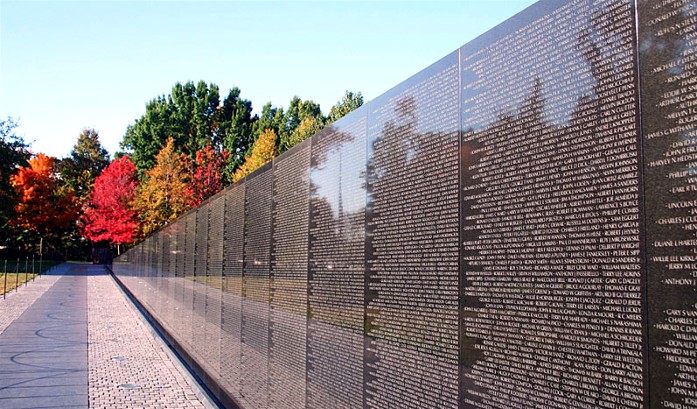
Vietnam War Memorial -
Washington D.C.
The Brookline
Monument - The Cannon

<Brookline
War Memorial> <> <Brookline
History> |