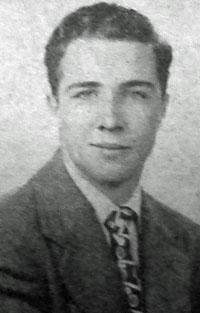
|
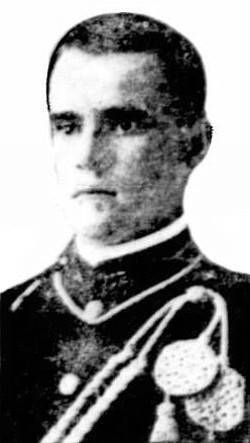
Pvt. Charles Luppe
United States Army (1918)

Charles Luppe was born on August 28, 1892,
the sixth of twelve children of Bertha and Johan Luppe, German emigrants who came
to America in 1884. Charles had six brothers, August, Adolph, Carroll, Otto,
Albert and Jonathan, and five sisters, Lena, Mary, Runos, Bertha and Martha. The
Luppe family lived at 440 Ferncliffe Avenue.
Charles was educated at West Liberty
Elementary School and then began working as a street laborer with his father. At
age twenty-four, he was drafted into the U.S. Army in January 1918 and left for
Camp Lee, Virginia on February 11, 1918. After military indoctrination, Private
Charles Luppe was assigned as an infantryman in Company I, 3rd Battalion, 319th
Infantry Regiment of the 80th "Blue Ridge" Infantry Division.
  
THE YANKS ARE COMING
The refrain of the most popular song of the
time went like this: "Over There, over there. Send the word, send the word over
there. That the Yanks are coming. The Yanks are coming. The drums rum-tumming
everywhere. So prepare, say a prayer. Send the word, send the word to beware.
We'll be over, we're coming over. And we won't come back 'till it's over.
Over There."
For Charles Luppe and the men of the Blue
Mountain Division it was more than a rallying cry. It was the real thing. They
were the men going "Over There," and they took their job dead seriously. After
three months of preparation, they broke camp and got into formation to begin
the journey to France to drive the Kaiser's Army back to Germany.
The Division left Camp Lee on May 23, 1918,
and hiked down to the James River. Boats transported the Division to Newport News.
Troop transports were waiting, and the doughboys put to sea about 3:00pm on the
afternoon of Sunday, May 26. The Atlantic crossing was uneventful, and after
fourteen days at sea they landed in Bordeaux, France.
Then the intensive training for the battle
front began. After a week at Bordeaux, the Division entrained for Calais, where it
encamped in an English rest camp. After four days there it was taken to Hesdenel and
billeted in barns at Hesdin l'Abbe. After two days the men moved out into their
tents. Almost three weeks were spent at this location.
The camp was close to Bolougne, and on several
nights Private Luppe and the men watched as German aviators bombed the town. After
marching to Desores and Samre several times, and attending musketry school at Carle,
the infantry entrained for Boquenaisan and hiked to Ivergny, where the 319th and
320th Regiments remained for three weeks.

Curious Frenchmen watch as the
march through the streets of France in June 1918.
From Ivergny the men hiked through Sus St.
Leger to Saulty, from where they made several trips to the front line trenches in
front of Blaiseville, just south of Arras. Several trips were also made into the
lines at Bausart, and at times they were kept busy dodging shells.
The course of instruction on the Arras front
was with the British, and various platoons and companies sent into the front line
trenches at times had considerable actual battle experience as the result of desultory
raids and other clashes between the British and the enemy. In this way the doughboys
were prepared for the great work they were to perform in the Argonne.
On September 25, after having marched two
nights from a rest camp in the St. Mihiel sector, the Blue Ridge Division reached
the Bethincourt sector of the front. The following morning, Private Luppe and the
319th Regiment were in the front line and ready to tackle anything the enemy had to
offer when the word was given for the start of the great Argonne-Meuse
Offensive.

From the morning of September 26 until the
29th they advanced into the Argonne. From October 4th through the 12th they were in
the Nantillois sector of the Argonne-Meuse battle, and were moved forward on November
1 to the St. Juvin sector where they fought until the 6th.
A FIRST-HAND ACCOUNT OF LIFE AT THE FRONT
The following is a detailed diary written by
Corporal Arthur Pollock of the 320th Regiment. It tells a lot about what it was like
for Private Charles Luppe in the nearby 319th Regiment.
"On September 24 about 5:00pm, near Lempere,
we rolled full packs and, in addition to the Chat-Chat automatic rifle, I had two
bombs, one hundred rounds of ammunition in my belt and two bandoliers of sixty rounds
each. At 6:00pm we had our supper of beef stew, bread and jam, Karo and coffee. On this
date we received semi-automatic pistols of .45 caliber. Our iron rations, or emergency
rations, consisted of four boxes of crackers, known as hard bread, and one can of
corned beef. At 7:00pm we started on a twelve kilometer march toward the
front."
"On this march we passed the great Verdun
cemetery, where two million soldiers are buried, of which over one million are German
and the balance were soldiers of the allies. When near Germanville, the Hun started to
shell the road we were marching on, so we put on our helmets. We marched through
Germanville and up a long hill to the trenches and dugouts in the woods northeast of
the village. Here we were about six kilometers from the front line with French heavy
artillery all around us, some of it capable of firing eighteen
kilometers."
"We arrived here shortly after midnight. I did
not pitch tents but just rolled up in my blanket and shelter half. For the first and only
time in my life I slept with a pistol under my head. All night the Huns were firing
shells over our heads into the town we had come through earlier in the evening, and how
we hoped they would not shorten their range."
SHELLS KILL MANY
"On September 25 we got up at 6:00am. It was
a very pretty morning and the weather was fine. I had breakfast at 8:00am, and then
cleaned omy automatic pistol and rifle, pitched my tent, and visited dugouts Number 6
which had been assigned to “F” company in case of an emergency."
"The main stairway down was fifty feet deep.
One room at the foot of the stairs was fitted up with bunks and there was also on this
floor a fully-equipped power plant for lighting the whole series of dugouts. About
halfway down the stairs there was also another large room equipped with bunks. Electric
lights were used throughout."
"At 2:00pm we had dinner - beef stew,
potatoes, bread and coffee. At 3:00pm, Captain Maag gave us a lecture on the use and
care of the pistol. At 5:30pm, we had supper, then the company was assembled and a
bulletin was read telling of the good behavior of the men while in training and their
determination to do their bit, and that now that the time had come to fight, they were
to show the same determination to win and fight to the end."
"Later, we put our rations and toilet
articles in one small pack and fixed up all our other belongings in a roll. At 9:00pm,
we lined up at the kitchen wagon for another meal, this time – beans, bread, syrup and
coffee."
"I had just left the wagon with my mess
kit full when Jerry dropped a shell not fifty feet from me. It hit our limber, or
supply wagon, for the kitchen, smashing it all to pieces and throwing our eats
everywhere. He dropped quite a few shells there among us in the next few minutes,
killing and wounding many of our regiment. We ran to dugouts and stayed there until
things quieted down a little, then formed on the road preparatory to leaving the
woods."
"While we were forming the shelling
continued. One struck a tree by the road a glancing blow and the shell came rolling
down the road not three feet from me. Luckily it was a ‘dud’ and did not explode. It
was an awful sensation to lie there (I was in a ditch of gutter beside the road), and
hear the boom of the shell as it left the German gun, then the whistling as it came
toward us and the bang as it burst around us, then the pitiful cries in the dark for
help and first aid. Later we heard there were eleven killed and thirty-one injured
while we were in this position."
MILLION DOLLAR BARRAGE
"We left about 11:00pm on a six kilometer
march for Bethicourt. As we left, the greatest barrage the world has ever known
started. ‘The million dollar barrage’ it is called and it lasted for twelve hours.
Had all the cannon used in this barrage been placed in line hub to hub, the length
of the line formed would have been longer than the entire battle front in
Europe."
It was about 4:00am when we were deployed
and ready for the word ‘Forward’ over the top into ‘No Man’s Land.’ We rested until
5:03am. The 4th Division regular army was on our left, and the 319th Regiment on our
right. ‘G’ and ‘H’ companies were in the first wave, and ‘F’ and ‘E’ companies were
‘moppers up.’ The 305th engineers were with us carrying rifles on one shoulder and
sections of bridges in the other."
"The Second battalion was covering a two
kilometer front. The First and Third battalions were in support. The 317th Regiment
was in reserve for the 320th, and the 318th were in reserve for the 319th Regiment.
The great barrage was put over for our division by the 33rd and 82nd Division
artilleries. There were about 600,000 Americans and 300,000 French soldiers engaged
in this drive."
"At 5:03am on September 26, the ‘zero
hour’ arrived. The noise made by the cannon and machine guns behind us was terrific.
You couldn’t hear the man next to you, but then he was about fifteen feet away in
this combat formation. The fog and smoke was so dense, too, that one could hardly
see the next man although the sun was slowly coming up."
"Soon after we started, Sergeant Halsey
was shot in the neck and spit the bullet out of his mouth, dying later. In the
confusion, the smell of smoke and powder was mistaken for gas and the awful masks
were put on."
"As we charged down the hill through the
smoke, fog and barbed wire entanglements with our masks on, we soon found ourselves
in the cellars and ruins of buildings which the retreating Huns had left burning.
Our squad had become detached from the rest of the company."
"After removing our masks we attempted
to locate our company. Hearing familiar whistles to our right and ahead of us, we
double-timed it in that direction and attached ourselves to Company C of the 319th
infantry, which was in the front line of assault.
"So far our progress had all been down
hill, and now as we charged up hill the fog lifted and we could see the work our
artillery was doing. The whole side of the hill was filled with shell holes, some
fifteen feet in diameter and nearly as deep. Barbed wire entanglements had been
torn all to pieces, and trenches and dugouts completely blown up."

The 319th Regiment of the 80th
Blue Ridge Division. Click on image for a larger photo.
IT WAS UPHILL WORK
"In spite of the great noise made by our
artillery in the rear we could hear the German machine guns in front of us. We
advanced up the hill by jumping from shell hole to shell hole. Sometimes the shells
would destroy the home of a jack rabbit, and he would go jumping across No Man’s
Land."
"Pretty soon a German popped up out of a
trench ahead of us with his hands up and yelled ‘Kamerad.’ As no one fired at him
he came toward us asking which way to go. Someone behind me told him ‘New York’
was back in the rear, and away he went in that direction on the double, hands up
all of the time."
"I wasn’t advancing very fast, for the
Jerries must have seen my automatic. Anyway when I wasn’t in a shell hole they
were making it pretty warm for me, and the bullets were singing around my helmet
at a great rate. Finally I made a dash the rest of the way up the hill and into
their trench."
"There they were, two youngsters. Both
were crying ‘Kamerad.’ The German machine gun is a water-cooled affair and we had
come upon them so swiftly, they hadn’t had time to connect it up but had fired it
until5 it was so hot it wouldn’t fire anymore."
"I searched my prisoners, and as they had
no arms I destroyed their machine gun and showed them the way back to the cage. You
can understand why a guard is not sent back with two or three men when I tell you
that about every three of four hundred yards there were lines of soldiers following
the front line."
"Over on my right there was a great deal
of cheering and yelling. The boys had captured a dugout in the same trench and
twenty-seven ‘square-heads’ as we called them. They were filing out to be searched
and started to the rear; some old men, some boys, but all appearing to be well-fed.
A lot of ammunition and some German grub were captured in the
trench."
"I might say right here that later reports
showed that 1,500 prisoners had been captured in the first half hour of battle. That
is a pretty good record considering that we occupied only two kilometers of the one
hundred kilometer front."
"Then we went ‘over the top’ again and
forward to the next German trench, leaving the ‘moppers-up’ to get all of the
Germans out of the dugouts and take captured material back. The machine guns
continued to fire on us and quite a few of our comrades were being wounded, but
there were a great many of dead and wounded Germans lying around
also."
"Before we reached the next trench a long
string of Jerries came out toward us with hands up; some were laughing and seemed to
think the war was over as far as their fighting was concerned. They handed our boys
their watches, knives, money, cigarettes, etc. as they filed up to be searched. A
dachshund dog came with them answering to the name of 'Kaiser' and followed the
'squareheads' back to the prison camp."

Americans advancing through the
Argonne during the Meuse-Argonne Offensice in September 1918.
INTO THEIR OWN BARRAGE
"In the excitement of taking prisoners we
had charged forward too fast and were ahead of our own barrage, in other words,
‘between two fires.’ Quite a few of our own men were badly mangled here. Not being
with my own company, I didn’t know any of the wounded, and it was hard to leave them,
but for our own safety we were ordered to the right into some
trenches."
"The doctors, first-aid men, and Red Cross,
followed right up and took care of the wounded. Rocket signals were sent up and our
airplanes which were flying overhead, hurried back to the artillery and soon the
shells were tearing great holes in the earth ahead of us again. I was now with
Company A of the 319th infantry."
"As we advanced again we came to a swamp
where the engineers were putting up a pontoon bridge. After crossing this we ran into
machine gun fire from some woods. Locating a machine gun and attempting to flank it,
I found myself with Company G of the 319th. I connected myself to the company and was
assigned to a squad. We soon captured the machine gun and advanced into the woods,
and to dugouts, where we spent the early part of the night."
"On our left twenty-five to thirty Germans
started toward us across an open field with their hands up. Some of the foreigners in
the company opened fire on them. They fell back and gave us an awful battle. Later in
the evening the German artillery got our range and airplanes dropped bombs on us.
All told we spent a very uncomfortable night to say the least.
"Soldiers killed or dying from being hit by
shrapnel turned a horrible yellow color, but those hit by machine gun bullets turned
blue."
"On this afternoon when Jerry was making
things warm for us our artillerymen sent over some liquid fire shells which set fire
to the woods which the Huns were holding, and with the officer’s field glasses we
were able to see them retreating far over the hills."
"On September 27, at 4:00am we combed the
woods which seemed to be a lumber camp or source of wood supply for the German army.
Without a barrage we conducted a raid on a little town which the Germans had used as
a hospital, and which as they retreated they left burning. We encountered a great
deal of barbed wire before reaching this town."
"Passing through the town we went up a
hill through another patch of woods, then down the other side of the hill to the
edge of the woods overlooking the Meuse River. The city of Dunnsur Meuse could be
seen in the distance. In the last woods we met several machine guns and captured
them. We had reached our objective at about 10:00am, but the 320th infantry on our
left had met with stiff resistance and had not advanced as far as we
were."

Machine gunners of the 80th "Blue
Ridge" Division man a position near the Meuse River.
IN THE ENEMY’S QUARTERS
"We dug bivrys big enough to shelter us
from machine gun fire, and Company headquarters were established in what had been a
German officer’s quarters. Here there was glass in the windows, lace curtains, a
desk, a table, a big leather Morris chair, and a ‘regular’ bed in another room. The
rooms were wired for electric lights. While here we were shelled quite a
bit."
"They used gas on us in the woods. This
little bungalow occupied by Company headquarters had also been a first aid station.
We spent the night here. Another company relieved us in the morning and at 6:00am
we moved back to support trenches on top of the hill."
"On September 28, the 320th on our left
had still not reached their objective, and we were in a pocket being shelled from
three sides, getting quite a lot of gas. German airplanes fired on us with machine
guns but our planes drove them off. Towards night, to make matters worse, it started
to rain and continued all night."
"We were in a shallow trench and had to
stay down on account of the flying shrapnel and machine gun bullets. The ranch was
soon a creek and we were soaked. German planes flew over us again, not a hundred
feet above, firing their machine guns directly at us."
"On Sunday morning, September 29, around
5:00am we were relieved and started on our march back. Having no water in my
canteen, it was on this march that I got so thirsty that I drank water from a shell
hole. I had given nearly all of the water in my canteen to wounded men. It was very
risky business to drink water out of a shell hole. A hole made by a gas shell leaves
residue that poisons the water."
"On our way back we saw great quantities
of ammunition and rifles, and even heavy artillery that had been captured from the
enemy. Some of this artillery had already been turned around and our gunners were
firing German ammunition from German guns. Our wounded had been taken care of and
the dead were being buried. In some places there were great heaps of dead Germans.
A great number of horses were dead along the roadside, most of them having been
gassed. Some of them even had gas masks on, probably put on too
late."
"The boys called these horses and mules
'more bully beef.' We passed several German airplanes that had been brought down
and saw lots of terribly mangled soldiers when we passed a field hospital. Further
back we met some of the little French whippet tanks, going like the dickens to
the front. They were probably making fifteen miles per hour and are about the size
of a Woods Mobilette with two men in each. We also met auto trucks full of
ammunition and rations, and plenty of artillery was being brought up closer to
the front."
"About noon we stopped in a woods and
the kitchen wagons came up, but before we could get started to eat ‘Jerry’
commenced shelling the woods. About the same time we received word that the 79th
Division, in front of where we were, was being driven back. There certainly were a
lot of wounded soldiers being brought back."
"Without waiting for dinner and as tired
as we were, we turned around and started forward to help our comrades. We had
progressed only a short distance when another plane flew over us and dropped a
message telling us the 79th Division had overcome the resistance and was again
advancing. Then we had our dinner by the roadside, the first warm meal in four
days."
"We marched past reserve trenches at Cuisy,
where I dug a bivry and tried to sleep. I had just finished my little dugout when it
commenced to rain. All night long the army mule rent the air with his unearthly
braying. (The warm dinner consisted of stew, tomatoes, coffee, bread, jam and
sugar.)"
"On September 30 we were moved to another
part of the trench and I made a new bivry and a fire. For dinner I warmed up some
canned roast beef and bacon and made coffee. In the afternoon I cleaned up my
equipment and rifle and at 6:00pm supper was served from the kitchen, which was now
located in the trench. We had roast beef, beans, coffee, doughnuts, bread, syrup and
sugar."
"On October 1, at 2:00pm, the men who had
been lost came back to the company. Breakfast was at 8:00am consisting of bread,
bacon, and coffee. In the forenoon I cleaned up for inspection, and also washed my
feet before we had foot inspection. For lunch at 2:00pm we had fresh beef stew, bread,
jam, coffee and sugar. In the afternoon the first mail came since September 22, via
‘G’ company."
"On October 2, I was on gas guard from 1:00
to 2:30am. The Germans were throwing shells over our heads at artillery trenches on
the hill behind us. Then we had breakfast. I was placed again on gas guard from 8:30
to 10:00am. We could see and hear the great shells going over our heads, and we could
see them tearing great holes on the other hill."
"Dinner was good, consisting of steak, gravy,
potatoes, bread, Karo and coffee. About 3:00pm, I located my own outfit (Company F,
320th infantry) in the same reserve trenches about two kilometers to the right. The
boys made quite a fuss over me and seemed glad to see me again."
SAW AIRPLANE BATTLE
"On October 3 I finished cleaning my equipment
for inspection in the afternoon. I saw some American planes engage a German aviator. The
German machine was brought crashing to the earth not far from where I was located. The
artillery’s captive elephant balloon (observation) had to be taken down several times
this afternoon on account of German airplane attacks."
"Jerry sent over a good bit of gas at night
and we had to put on our gas masks no less than a half dozen times. Some of us went to
sleep with them on."
"We got up at 5:45am on October 4 and rolled
our packs. This was done so that we could always be ready for any emergency. A jack
rabbit running across the hill attempted to jump over our trench. It fell into Corporal
Timmor’s arms and we had rabbit for dinner."
"During the afternoon three Boche planes were
brought down by American aviators within a very few minutes. It was rumored that the
318th had reached their objective and the 319th had gone forward to help the 317th.
After supper we unrolled our packs and tried to sleep. We were gassed all night but had
no casualties."

The route of the 319th Infantry on the
night of October 4 was past these farmhouses and through the woods.
The Germans were driven from the farmhouses by rifle fire and
grenades.
"On October 5, after breakfast, we rolled our
packs, then cleaned up for inspection and wrote letters. After dinner we signed the pay
roll. German planes again attacked the elephant balloon a number of times, the operator
dropping in a parachute each time, and the balloon being pulled down in time to save it.
We unrolled our packs and slept in the trenches again."
PLANES ATTACK BALLOON
"On October 6 we were up at 5:30am. In the
forenoon I took a walk over the battlefields at Cuisy. In the afternoon German planes
made four attacks on the artillery observation balloon, the operator getting away safely
each time. Finally a Jerry plane dropped from a great height, firing white hot bullets
which set fire to the balloon and it came down in smoke."
"The operator landed safely with his parachute.
All the machine guns, automatic rifles and anti-aircraft guns fired at the enemy plane
but it got away. I slept in the trenches again. In back of our trenches, the heavy
artillery was throwing shells into the enemy lines a distance of about fifteen
kilometers."
"On October 7, we were treated to butter at
breakfast. I worked in the kitchen all morning carrying water, shining pans and other
supplies. At 3:00pm we rolled our packs and after a light supper at 7:00pm marched two
miles in a heavy rain to trenches in back of Montfaucon."
"Here our coast artillery reserve guns were
throwing eight-inch shells twenty-two kilometers into Anereville at the rate of thirty
a minute, every other one being gas. It rained all night, and on the hike I tripped over
barbed wire a number of times and fell into shell holes. I was on gas guard two turns of
one hour each in these trenches."

A section of trench on Morthomme Hill
near Verdun. From here the 319th Infantry joined the attack.
"On October 8, we again rolled packs and
marched to some other trenches. This march was not long and we reached our destination
before noon. While cleaning my equipment in the afternoon rumors came in, supposedly by
wireless, that peace had been signed by Turkey, and Germany was asking for an armistice.
The dispatch was received by the artillery. The 308th engineers, of Ohio, formerly
trained at Camp Sherman, were working on a road nearby. Airplanes flew low and dropped
copies of newspapers."
RUMORS OF THE ARMISTICE
"On our left we could see the ruins of a
castle on top of a high hill, where it is reported the Kaiser watched the slaughter
of his legions before Verdun, in the first Verdun offensive, through a million dollar
telescope. The telescope could not be removed in time and was destroyed. The high hill
was near Montfaucon. We went to bed shortly after supper."
"On October 9, we were up at 6:00am, rolled
our packs but did not move out until 5:00pm. There were rumors that officers were
betting five thousand francs (one thousand dollars) that no guns would be fired after
the following Monday, October 14."
"We stopped near the top of a hill and dug
in. Later we left again and went to trenches near Nantalois, about five miles from
Cuisy. On this march we met a long string of German prisoners being taken back. As they
passed we heard one German say in pretty good English: ‘The American soldier is not very
big, but he knows how to handle the bayonet.’ They may have met some of the little
Italian boys of our division, who certainly were adept in the use of the cold
steel."
"One prisoner had been shot in the knee. He
told us that he and four other Germans had started over to give themselves up. The
others got scared and started back and were killed, but he came on and was wounded. He
said they hadn’t eaten for ten days. Someone gave him half a loaf of bread and he
devoured it quickly, in a manner supporting his statement."
"He told us there were not many Germans ahead
of us, and that they had no soldiers in support or reserve, and practically no
ammunition. He also told us the people back home (in Germany) were starving and he was
glad to be in the hands of the Americans."
"He was well advised for he knew that nearly
three million Americans had reached France, that Turkey was suing for a separate peace,
and that Austria was liable to break with Germany at any minute. After a rest until
2:00am I carried rations up to the men in the front line."
"On October 10 at 11:00am we were ordered
from the support trenches, with full packs, to follow up the advancing front line. On
the way up we took our blanket rolls from our haversacks and left them by the roadside.
A Jerry plane or observation balloon must have seen us, for soon after we started again
the Huns shelled the road and blew our rolls all to pieces."
"I lost everything I had except my razor,
shaving brush, soap and towel, which I was carrying in my haversack on my back. Two
other soldiers and I found a trench, removed a dead soldier from it, and dug a bivry
which we covered with a piece of tin we had torn from a destroyed German billet. The
sheet-iron probably saved us from some painful scratches, for shrapnel was continually
raining on it all night and set up a merry patter. All night we took turns on gas
guard."
"Moving up through the German trenches, it
was not an uncommon thing to stumble over a shoe with a foot in it, or a glove with a
hand in it, and at one place I saw a helmet with brains in it."

Men of the 80th Division going
"over the top" to attack a German position in the Argonne.
“OVER THE TOP” AGAIN
"On October 11 we were up at 6:00am, and at
8:00am we marched about one kilometer to other trenches at the front and went over the
top at 2:30pm into the woods. The Boche put up a hail of machine gun fire and many men
were killed of wounded. As it got dark, I was ordered back into the
woods."
"We were met by 315th Machine Gun men who
told us our division had been relieved. I went back to battalion headquarters, then to
the bivry I made the day before, where I ate canned salmon, beans and crackers and took
turns on gas guard all night. About 3:00am Jerry sent over quite a bit of gas with his
high explosive shells. I was very tired and slept with my gas mask off. Gas shells burst
with a puff instead of a bang, throwing liquid which turns into gas when it
evaporates."
"The Germans have a habit of sending gas over
early in the morning along with high explosive shells. The liquid scattered by gas
shells of this particular variety over bushes and grass doesn’t evaporate until the sun
comes up, and one may be unsuspecting of gas until it is too late."
"Anybody lying on the grass or passing through
bushes where the mustard liquid gas had been scattered usually gets terrible burns.
German machine gunners have been wearing bands on their arms with a red cross on them.
They are sometimes mistaken for our own first aid men."
"In these woods we found some trees which had
two and three platforms built between the limbs, upon which machine guns were operated.
There was also a large box buried in the ground under bushes at the foot of a tree,
where another machine gun had been placed."
"Having been relieved by the 60th and 61st
Infantries on October 12, we moved back to support trenches near Nantalois where we
washed up, shaved, and slept in the morning. While eating supper about 4:00pm, the Huns
shelled the area, one shell knocking a horse from under a military policeman and
blowing it all to pieces."
"An American soldier was bringing back six
German prisoners when a shell killed all the prisoners, but only shook the guard up
a bit. Stretcher bearers were bringing back quite a few wounded men, and many
prisoners were being marched to the rear."
"At 5:00pm we started on an eighteen
kilometer hike over very rough roads to woods near Avocourt, where the whole battalion
was resting. We arrived here at 11:45pm, and as I had no shelter-half and no blanket,
I slept with another soldier. We used our slickers for a mattress and threw his blanket
over us."

Map showing the American advances in the
Argonne-Meuse Offensive.
IN THE REST AREA
"On October 13, bread, bacon and coffee
were served for breakfast at 8:00am. Then Martin and I walked five kilometers for
water and missed our dinner. We had a band concert in the afternoon. We also got
two blankets and new clothes. The YMCA issued each man one and one-half cakes and
two square inches of chocolate."
"After supper I visited with 'C' company.
Artillerymen here tell of finding a German chained to his cannon, but who when
released turned his gun around and made a direct hit on a German ammunition dump ten
kilometers back."
"On October 14 we got up at 4:00am and had
breakfast at 5:00am, then hiked four kilometers to Brizeaux. We were taken past the
town about one kilometer and had to walk back. Here we were billeted in barns and old
buildings."
"I soon found the remains of a cot, which
I repaired and made into a comfortable bed. Here we were able to buy milk and Dutch
cheese sandwiches. The kitchen did not arrive until the next day, and so we ate the
iron rations we were carrying with us."
"On October 15 there was no reveille. We
got up and got our own breakfast at 7:00am. We were issued more new clothes in the
morning, and in the afternoon we had a hot shower bath. Our underclothes, being full
of ‘cooties,’ had to be thrown away, and I had none for a few days. The kitchen came
in the afternoon. It rained all evening. I had a warm supper and slept in my
billet."

Soldiers of the 80th Division advancing
through the town of St. Juvin in October 1918.
FIGHTING NEAR ST. JUVIN
The 80th Division remained in the rest camp
for twelve more days, then made preparations to move back to the front. While talks
of an armistice circulated through the men, the war continued. The Americans were
determined to force the Hun into capitulation. This meant that the attacks, the
destruction and the loss of life and limb would continue.
On October 30, the Division left the rest area
and moved back to the front, now located near the St. Georges-St. Juvin Road. There
the 319th Regiment would again do battle with the Germans and once more the Americans
would continued their push towards the German frontier.
It was here, on November 1, 1918, near the
picturesque French town of St. Juvin, that Private Charles Luppe was severely
wounded. He was taken back to an aid station and died shortly thereafter. The 80th
Division would continue fighting until November 6 before this final offensive thrust
came to an end.

Only ten days after Private Luppe's death, on
November 11, 1918, the Allies and the Empire of Germany finally signed the Armistice
formally ending the hostilities on the Western Front and bringing the Great World War
to a conclusion.
Word of Charles Luppe's death reached the Luppe
family at 440 Ferncliffe Avenue near the end of the month. The Pittsburgh Press reported
on December 28 that he had been seriously wounded, but by then the Luppes were aware of
Charles' fate.
The Luppe family, the neighborhood of Brookline
and its large German community all mourned the death of Charles Luppe. He was the
last of three Brookline soldiers to die in the Great War. His body was returned to the
United States and buried in the West Liberty German Cemetery in Beechview.

* Written by Clint Burton:
May 24, 2018 *
The Brookline
War Memorial

Listed below are
many of the sons of Brookline who gave their
lives to preserve freedom and contain aggression during
World War I, World War II, Korea and Vietnam.
“It is foolish and wrong to mourn the men who died.
Rather, we should thank God that such men lived.”
General George S. Patton


World War I
(1917-1919)
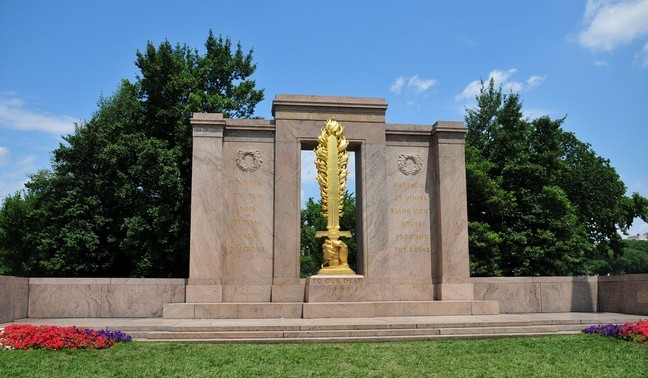
The World War I Memorial -
Washington D.C.
<> <>
<> <> <> <> <> <> <> <>
<> <> <> <> <> <> <> <>
<> <> <> <> <> <> <> <>
<> <> <> <> <> <>
World War II
(1941-1945)
|
Alm, William H.
Pioneer Avenue
Army
Details |
Arensberg, Roy T.
Fernhill Avenue
Army
Details |
|
Bracey, Bruce H.
Plainview Avenue
Army
Details |
Brickley, Edward G.
Woodward Avenue
Army
Details |
|
Capogreca, James J.
Merrick Avenue
Navy
Details |
Copeland, Clarence R.
Creedmoor Avenue
Navy
Details |
|
Cullison, Thomas J.
Birtley Avenue
Army
Details |
Dempsey, Howard F.
Berkshire Avenue
Army
Details |
|
Dempsey, Walter F.
Milan Avenue
Navy
Details |
Diegelman, Edward R. Jr
Norwich Avenue
Army
Details |
|
Dornetto, Frank P.
Jacob Street
Navy
Details |
Doyle, John F Jr.
Eben Street
Navy
Details |
|
Fagan, Gerald B.
Woodbourne Avenue
Army
Details |
Falk, Harold E.
Pioneer Avenue
Army
Details |
|
Fehring, Robert M.
Fernhill Avenue
Army
Details |
Gmuca, Joseph J.
Brookline Boulevard
Army
Details |
|
Heil, Robert F.
Bayridge Avenue
Army
Details |
Hynes, Richard E.
Waddington Avenue
Army
Details |
|
Kestler, Paul C.
Creedmoor Avenue
Navy
Details |
Ketters, Robert C.
Berkshire Avenue
Army
Details |
|
Mahoney, Michael J.
Oakridge Street
Army
Details |
Majestic, Arthur B.
Starkamp Avenue
Army
Details |
|
Mayberry, Alexander G.
Breining Street
Army
Details |
Mazza, John
Alwyn Street
Army
Details |
|
McCann, Robert F.
Edgebrook Avenue
Navy
Details |
McFarland, Hugh R.
McNeilly Road
Army
Details |
|
Meisner, Walter F.
Berwin Avenue
Merchant Marine
Details |
Miller, William J.
Norwich Avenue
Army
Details |
|
Napier, Edward J.
Brookline Boulevard
Army
Details |
Nicholson, John D.
Woodbourne Avenue
Army
Details |
|
O'Day, John R.
Creedmoor Avenue
Navy
Details |
Orient, Andrew D.
Fordham Avenue
Army
Details |
|
Pisiecki, Raymond A.
Wolford Avenue
Army
Details |
Reeves, Alfred M.
Brookline Boulevard
Army
Details |
|
Reitmeyer, John P.
Bellaire Avenue
Navy
Details |
Rhing, Vern M.
Norwich Avenue
Army
Details |
|
Ruane, Roy J.
Berkshire Avenue
USMC
Details |
Shannon, Harry C.
Midland Street
Army
Details |
|
Shannon, Jack E.
Midland Street
USMC
Details |
Simpson, James D.
Woodbourne Avenue
Army
Details |
|
Spack, Harry
Linial Avenue
Army
Details |
Tobin, Paul M.
Woodbourne Avenue
Army
Details |
|
Vierling, Howard F.
Fordham Avenue
Army
Details |
Wagner, Ralph G.
Shawhan Avenue
Army
Details |
|
Wentz, Walter L. Jr
Woodbourne Avenue
Army
Details |
Zeiler, Harold V.
West Liberty Avenue
Army
Details |

The World War II Memorial -
Washington D.C.
<> <>
<> <> <> <> <> <> <> <>
<> <> <> <> <> <> <> <>
<> <> <> <> <> <> <> <>
<> <> <> <> <> <>
Korean War
(1950-1953)

Korean War Memorial -
Washington D.C.
<> <>
<> <> <> <> <> <> <> <>
<> <> <> <> <> <> <> <>
<> <> <> <> <> <> <> <>
<> <> <> <> <> <>
Vietnam War
(1965-1973)
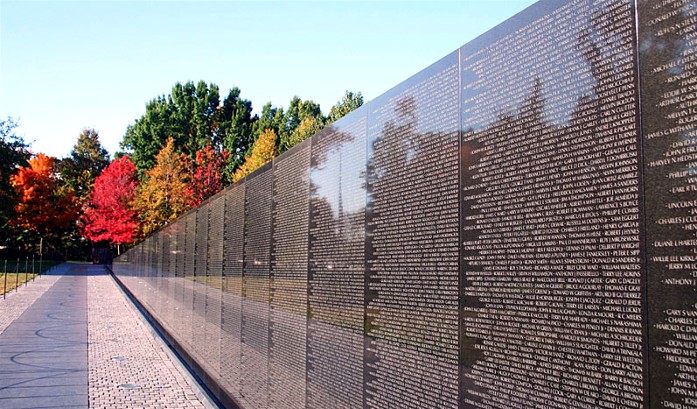
Vietnam War Memorial -
Washington D.C.
The Brookline
Monument - The Cannon

<Brookline
War Memorial> <> <Brookline
History> |